

Post-Truth Beauty:
Can We Still Trust a Review?
Words: Dhav Naidu
Once, a beauty review carried weight. It was a fragment of shared experience: intimate, subjective, but offered in good faith. You trusted the tone, if not the verdict. Perhaps it came from a magazine columnist with years of context, or a lone beauty blogger who posted photographs in poor light but wrote with uncommon candour. Either way, it felt traceable.
Human.
The Belgian collective GAMUT embraces anonymity not as a marketing ploy but as an ethical stance.
Now, trust is in short supply. The internet groans under the weight of glowing reviews, five-star ratings, and “unsponsored” recommendations that are anything but. AI writes product copy and chatbots populate comment sections with uncanny testimonials. Across platforms, influencers lavish praise with such frenzied frequency that it’s become harder to know whether they even recall what they recommended last week. Skin is filtered, light is edited, reality is curated. It is no longer clear where affection ends and strategy begins.
In beauty, this matters. The product is intimate. It touches skin, lingers on the body, colours our faces, mixes with our scent. It promises not just results, but transformation. A review, at its best, was always a kind of miniature memoir—a moment of contact between person and object, language and sensation. But in this age of post-truth aesthetics, the form has been flattened. The review has become content. The content has become noise.
What’s replaced it is a strange echo chamber of enthusiasm. Everything is “game-changing”, “obsessed”, “worth the hype”. Nothing is “fine”, “mediocre”, or “probably not for me”—though, in lived reality, most products are. The average viewer now scrolls through a dozen rave reviews before realising that they are watching paid endorsements, however subtly disclosed. Trust, once assumed, must now be earned retroactively.
This is not entirely new. The blurring of editorial and advertising began long ago. What’s different now is the scale—and the speed. Algorithms reward drama and praise, not ambivalence or rigour. Short-form videos, aestheticised flatlays, sped-up skincare routines—none of these leave room for context. Meanwhile, the rise of AI-generated skincare advice and copywriting has added a synthetic sheen to an already slippery space. One viral TikTok recommendation could be written by a bot. Another might be read off a script provided by the brand. The viewer can no longer tell. Even sincerity sounds rehearsed.
As journalist Jessica DeFino observed in The Guardian, “beauty content today isn’t designed to inform—it’s designed to convert.” The digital beauty economy is not built on truth but on influence masquerading as intimacy. And when the primary goal is sales, accuracy becomes optional.
In the wake of this fatigue, a quiet movement has begun. Consumers—especially those with wealth, experience, or industry proximity—are retreating from the noise. Private recommendation circles are emerging: encrypted WhatsApp threads, unlisted Substacks, invite-only events where the exchange of beauty intelligence occurs face to face. These are not forums for influence; they are circles of discretion. Who uses what, and why, is shared in a hushed economy of trust. The ultra-wealthy, notably, are abandoning social media-driven launches altogether. They test products in clinics, not via content. They don’t want to be told what’s good. They want results, off-record.
In certain circles, review culture has reversed entirely. Products are no longer praised; they are quietly passed around and judged silently. Obsession is private. Devotion is word-of-mouth. One discreet recommendation from a dermatologist or perfumer is worth a thousand likes. A serum is kept secret not for scarcity, but because it actually works—and works best unsponsored, untagged, untouched.
Some brands are beginning to respond. A handful have scrapped influencer launches in favour of clinical trials, lab-backed proof, or in-person sampling for hand-picked customers. Others have returned to long-form storytelling—anchoring new products in material science or cultural history, rather than shallow hype. Still, these are exceptions. The dominant noise remains relentless.
But even amid the saturation, a new kind of reviewer is emerging. They speak slowly. They post irregularly. They say things like, “This didn’t work for me, but here’s why it might for someone else.” They offer texture, not slogans. Some are chemists. Others are writers. None are trying to go viral. Their authority lies in transparency, not glow.
Because the truth is: the post-truth review isn’t a lie—it’s an aesthetic. It mimics sincerity. It packages credibility. But it rarely touches the product. And beauty, for all its artifice, is ultimately grounded in touch. You know when something works. You feel it. You reach for it again and again, long after the campaign has faded.
“Consumers are overwhelmed and underwhelmed at the same time,” said Dr Shereene Idriss, founder of PillowtalkDerm, in a recent panel. “Everyone’s selling something, and everyone’s saying the same thing. The trust is gone because the differentiation is gone.”
Perhaps the most trustworthy review, then, is the one unspoken. The eye cream used to the last drop. The lipstick worn in private. The oil that smells of memory. These aren’t declarations. They are repetitions—habits of affection that require no praise.
So: can we still trust a review? Yes. But only when we know the reviewer. Only when the words feel lived. And increasingly, when those words are fewer, quieter, and far harder to find.
In a beauty landscape saturated with performance, trust is not extinct. It is discreet. Off-grid. Hard-earned. And, for now, far too precious to hashtag.
Post-Truth Beauty:
Can We Still Trust a Review?
Words: Dhav Naidu
Once, a beauty review carried weight. It was a fragment of shared experience: intimate, subjective, but offered in good faith. You trusted the tone, if not the verdict. Perhaps it came from a magazine columnist with years of context, or a lone beauty blogger who posted photographs in poor light but wrote with uncommon candour. Either way, it felt traceable.
Human.
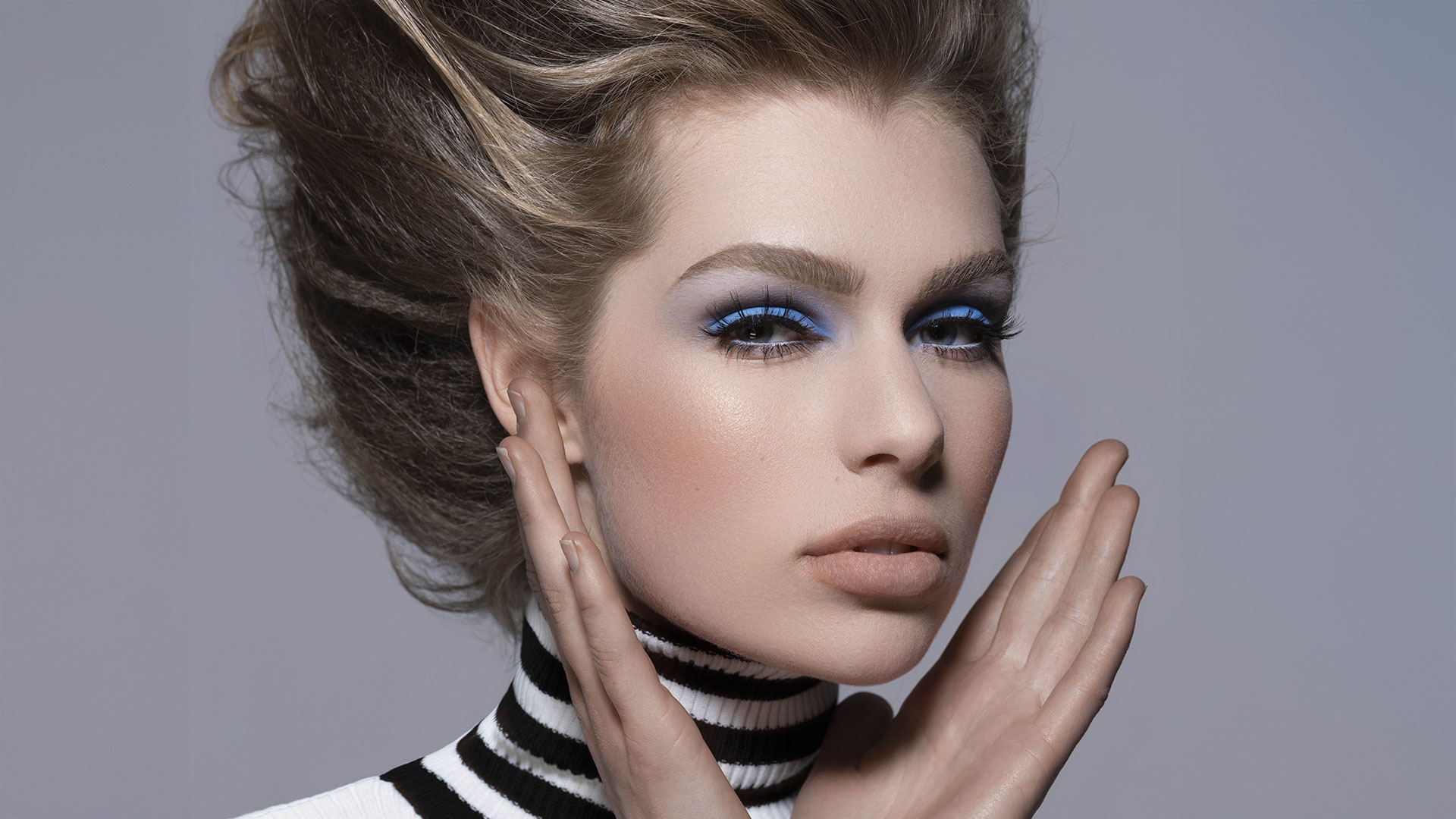
The Belgian collective GAMUT embraces anonymity not as a marketing ploy but as an ethical stance.
Now, trust is in short supply. The internet groans under the weight of glowing reviews, five-star ratings, and “unsponsored” recommendations that are anything but. AI writes product copy and chatbots populate comment sections with uncanny testimonials. Across platforms, influencers lavish praise with such frenzied frequency that it’s become harder to know whether they even recall what they recommended last week. Skin is filtered, light is edited, reality is curated. It is no longer clear where affection ends and strategy begins.
In beauty, this matters. The product is intimate. It touches skin, lingers on the body, colours our faces, mixes with our scent. It promises not just results, but transformation. A review, at its best, was always a kind of miniature memoir—a moment of contact between person and object, language and sensation. But in this age of post-truth aesthetics, the form has been flattened. The review has become content. The content has become noise.
What’s replaced it is a strange echo chamber of enthusiasm. Everything is “game-changing”, “obsessed”, “worth the hype”. Nothing is “fine”, “mediocre”, or “probably not for me”—though, in lived reality, most products are. The average viewer now scrolls through a dozen rave reviews before realising that they are watching paid endorsements, however subtly disclosed. Trust, once assumed, must now be earned retroactively.
This is not entirely new. The blurring of editorial and advertising began long ago. What’s different now is the scale—and the speed. Algorithms reward drama and praise, not ambivalence or rigour. Short-form videos, aestheticised flatlays, sped-up skincare routines—none of these leave room for context. Meanwhile, the rise of AI-generated skincare advice and copywriting has added a synthetic sheen to an already slippery space. One viral TikTok recommendation could be written by a bot. Another might be read off a script provided by the brand. The viewer can no longer tell. Even sincerity sounds rehearsed.
As journalist Jessica DeFino observed in The Guardian, “beauty content today isn’t designed to inform—it’s designed to convert.” The digital beauty economy is not built on truth but on influence masquerading as intimacy. And when the primary goal is sales, accuracy becomes optional.
In the wake of this fatigue, a quiet movement has begun. Consumers—especially those with wealth, experience, or industry proximity—are retreating from the noise. Private recommendation circles are emerging: encrypted WhatsApp threads, unlisted Substacks, invite-only events where the exchange of beauty intelligence occurs face to face. These are not forums for influence; they are circles of discretion. Who uses what, and why, is shared in a hushed economy of trust. The ultra-wealthy, notably, are abandoning social media-driven launches altogether. They test products in clinics, not via content. They don’t want to be told what’s good. They want results, off-record.
In certain circles, review culture has reversed entirely. Products are no longer praised; they are quietly passed around and judged silently. Obsession is private. Devotion is word-of-mouth. One discreet recommendation from a dermatologist or perfumer is worth a thousand likes. A serum is kept secret not for scarcity, but because it actually works—and works best unsponsored, untagged, untouched.
Some brands are beginning to respond. A handful have scrapped influencer launches in favour of clinical trials, lab-backed proof, or in-person sampling for hand-picked customers. Others have returned to long-form storytelling—anchoring new products in material science or cultural history, rather than shallow hype. Still, these are exceptions. The dominant noise remains relentless.
But even amid the saturation, a new kind of reviewer is emerging. They speak slowly. They post irregularly. They say things like, “This didn’t work for me, but here’s why it might for someone else.” They offer texture, not slogans. Some are chemists. Others are writers. None are trying to go viral. Their authority lies in transparency, not glow.
Because the truth is: the post-truth review isn’t a lie—it’s an aesthetic. It mimics sincerity. It packages credibility. But it rarely touches the product. And beauty, for all its artifice, is ultimately grounded in touch. You know when something works. You feel it. You reach for it again and again, long after the campaign has faded.
“Consumers are overwhelmed and underwhelmed at the same time,” said Dr Shereene Idriss, founder of PillowtalkDerm, in a recent panel. “Everyone’s selling something, and everyone’s saying the same thing. The trust is gone because the differentiation is gone.”
Perhaps the most trustworthy review, then, is the one unspoken. The eye cream used to the last drop. The lipstick worn in private. The oil that smells of memory. These aren’t declarations. They are repetitions—habits of affection that require no praise.
So: can we still trust a review? Yes. But only when we know the reviewer. Only when the words feel lived. And increasingly, when those words are fewer, quieter, and far harder to find.
In a beauty landscape saturated with performance, trust is not extinct. It is discreet. Off-grid. Hard-earned. And, for now, far too precious to hashtag.
Subscribe
Subscribe for curated content and updates from We Are Them.